

October is National Protect Your Hearing Month — a good time to take a closer look at the noise levels around you and understand when hearing protection may be necessary.
Whether you work in manufacturing, construction, transportation, industrial facilities or another high-noise environment, understanding decibel levels is an important part of hearing conservation.
What Is a Decibel?
A decibel (dB) is a unit used to describe the intensity or level of sound. The higher the decibel level, the louder the sound. Because the decibel scale is logarithmic, a small increase in decibels can represent a significant increase in sound intensity.
Understanding common decibel ranges can help workers recognize potentially hazardous noise and make informed decisions about hearing protection. Most everyday sounds are safe, but as noise levels increase, so does the risk of hearing damage, especially when exposure lasts for extended periods.
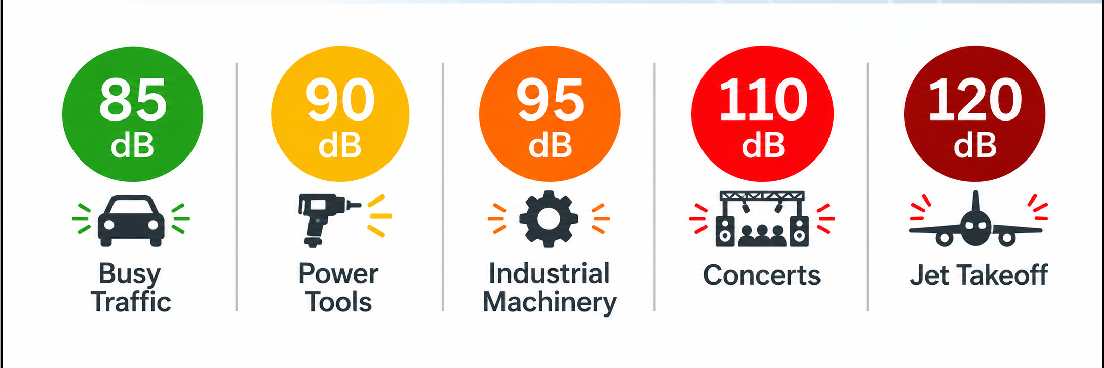
70 dB
Typical conversation, office environments, or household appliances are often around 70 dB. Noise at this level is generally not considered hazardous to hearing.
85 dB: The OSHA Action Level
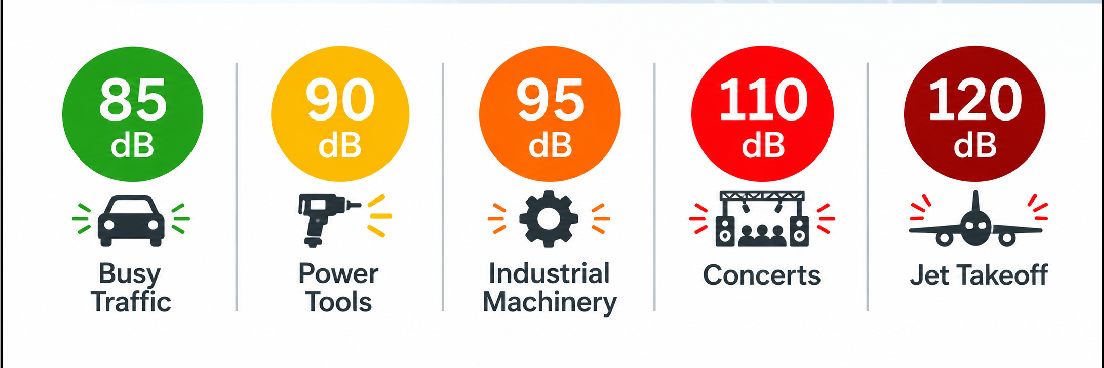
Noise levels around 85 dB can be found in heavy traffic, manufacturing equipment, and busy industrial settings.
OSHA requires employers to implement a Hearing Conservation Program when workers are exposed to an average noise level of 85 dBA over an 8-hour workday. This includes noise monitoring, employee training, hearing tests, and making hearing protection available. [osha.gov],
90 dB and Above
Heavy machinery, power tools, and production equipment commonly generate noise of 90 dB or more.
OSHA's permissible exposure limit is 90 dBA over an 8-hour workday. When noise reaches this level, employers must use engineering or administrative controls to reduce exposure, and hearing protection must be used when those controls cannot adequately lower noise levels. [osha.gov], [osha.gov]
95 to 110 dB
Industrial equipment, manufacturing processes, and some power tools can produce noise in this range.
As sound levels increase, the amount of time you can be safely exposed decreases significantly. Consistent use of properly fitted hearing protection becomes critical in these environments.
115 dB and Above
Very loud industrial processes, sirens, concerts, and explosive sounds can exceed 115 dB.
At these levels, even brief exposure may contribute to permanent hearing damage. OSHA limits exposure to 115 dBA to 15 minutes or less per day, and impact noise should never exceed 140 dB peak sound pressure. [osha.gov], [ecfr.gov]
The Bottom Line
Hearing loss is permanent but preventable. If workplace noise regularly reaches 85 dB or higher, hearing conservation measures should be in place. At 90 dB and above, hearing protection becomes essential for protecting workers from long-term hearing damage and maintaining OSHA compliance. [osha.gov],
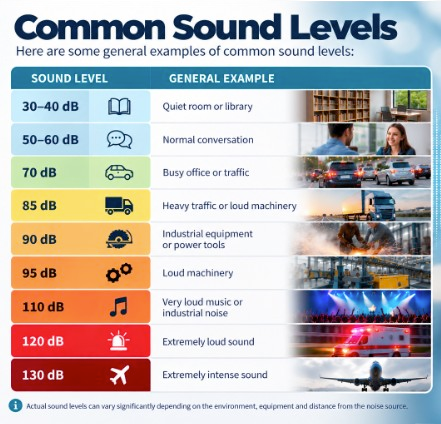
Here are some general examples of common sound levels:
Why Hearing Protection Matters
Noise-induced hearing loss can develop gradually. A worker may not notice a change in hearing immediately, but repeated exposure to loud environments can have long-term consequences.
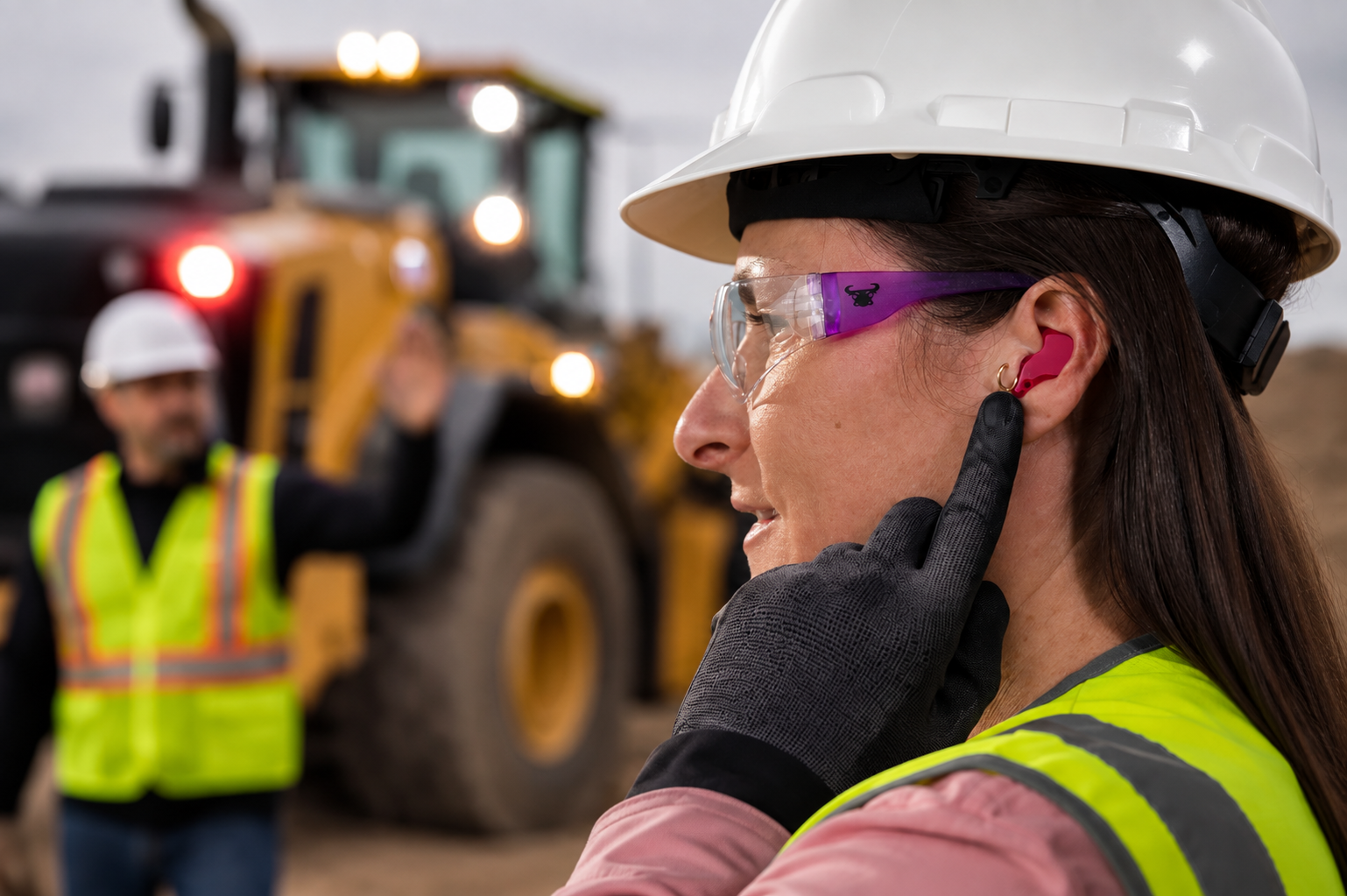
Hearing protection is one component of a broader hearing conservation strategy. The best hearing protection is protection that is appropriate for the noise environment, properly fitted and consistently used.
Why Choose Custom Hearing Protection?
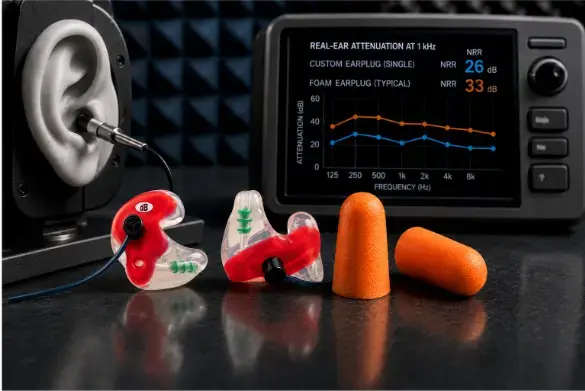
Traditional disposable earplugs are designed to fit a wide range of users. Custom hearing protection takes a different approach. For workers who wear hearing protection throughout the workday, comfort and fit can be particularly important.
Custom Hearing Protection for Industrial Environments
Different workplaces have different hearing protection requirements. Manufacturing facilities, construction sites, energy operations, transportation environments and other industrial workplaces may expose workers to varying levels and types of noise. Custom Protect Ear provides custom hearing protection solutions designed for demanding work environments.
dB Blockers®
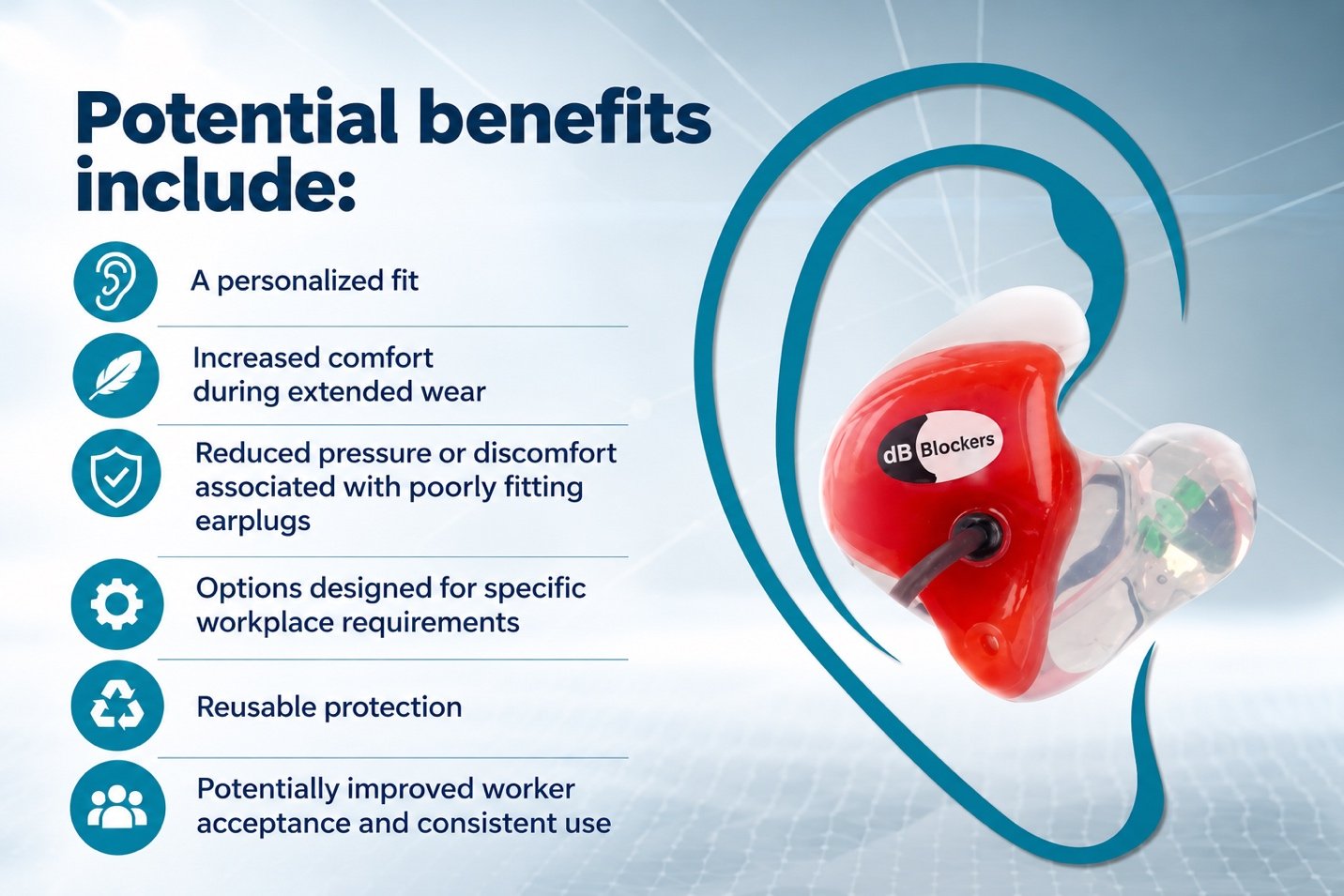
dB Blockers are custom-molded hearing protection designed to provide a personalized fit for the individual wearer. Depending on the application, custom hearing protection can help workers protect their hearing while supporting communication and awareness of their surroundings. For workplaces where communication is important, selecting the right type of hearing protection is particularly important.
What About Metal Detectable Earplugs?
Some manufacturing and food-processing environments have additional requirements for foreign-object detection. Metal detectable earplugs and reusable metal detectable hearing protection can be designed for environments where detecting protective equipment is an important part of workplace safety and quality-control procedures. Organizations should select hearing protection based on the specific requirements of their workplace, noise exposure and hearing conservation program.
Hearing Protection Should Fit the Worker — and the Environment
There is no single hearing protection solution that is ideal for every workplace. The appropriate solution depends on factors such as:
-
Noise levels
-
Duration of exposure
-
Type of noise
-
Communication requirements
-
Required attenuation
-
Worker comfort
-
Fit (in ear)
-
Workplace safety requirements
For workers exposed to high levels of noise, understanding the decibel range is only the first step. The next step is choosing hearing protection designed for the environment and the people working in it.
Frequently Asked Questions
What common challenges occur when wearing foam earplugs for noise?
Foam earplugs can be uncomfortable when worn for extended periods and require proper insertion to create an effective seal. Poor fit may reduce protection and make it harder to hear speech or important sounds. Custom-fit hearing protection is designed for a secure, comfortable fit tailored to the individual’s ear.
How can radios be used with custom hearing protection?
Custom Protect Ear’s dB Blockers® can be paired with dB Com® communication solutions to connect with workplace radios. Depending on the radio system, different connection options are available, allowing workers to communicate while keeping their hearing protection in place
What is the best type of hearing protection?
The appropriate hearing protection depends on the noise environment, required attenuation, communication needs, workplace requirements and individual fit. Custom molded hearing protection can be an option for workers who need a personalized and reusable solution.
What is custom hearing protection?
Custom hearing protection is made using an impression or digital scan of an individual's ear to create a personalized fit. This can provide a more tailored fit than standard one-size-fits-all earplugs.
Protect Your Hearing This October
National Protect Your Hearing Month is a reminder that hearing protection should be part of everyday safety — particularly for people who work around loud equipment and industrial noise.
Start by understanding the noise around you.
Know your decibel levels. Understand your exposure. Choose appropriate hearing protection. And when workers need a personalized solution, custom hearing protection can provide the fit and comfort needed for consistent use.
Learn more about dB Blockers and custom hearing protection from Custom Protect Ear.