


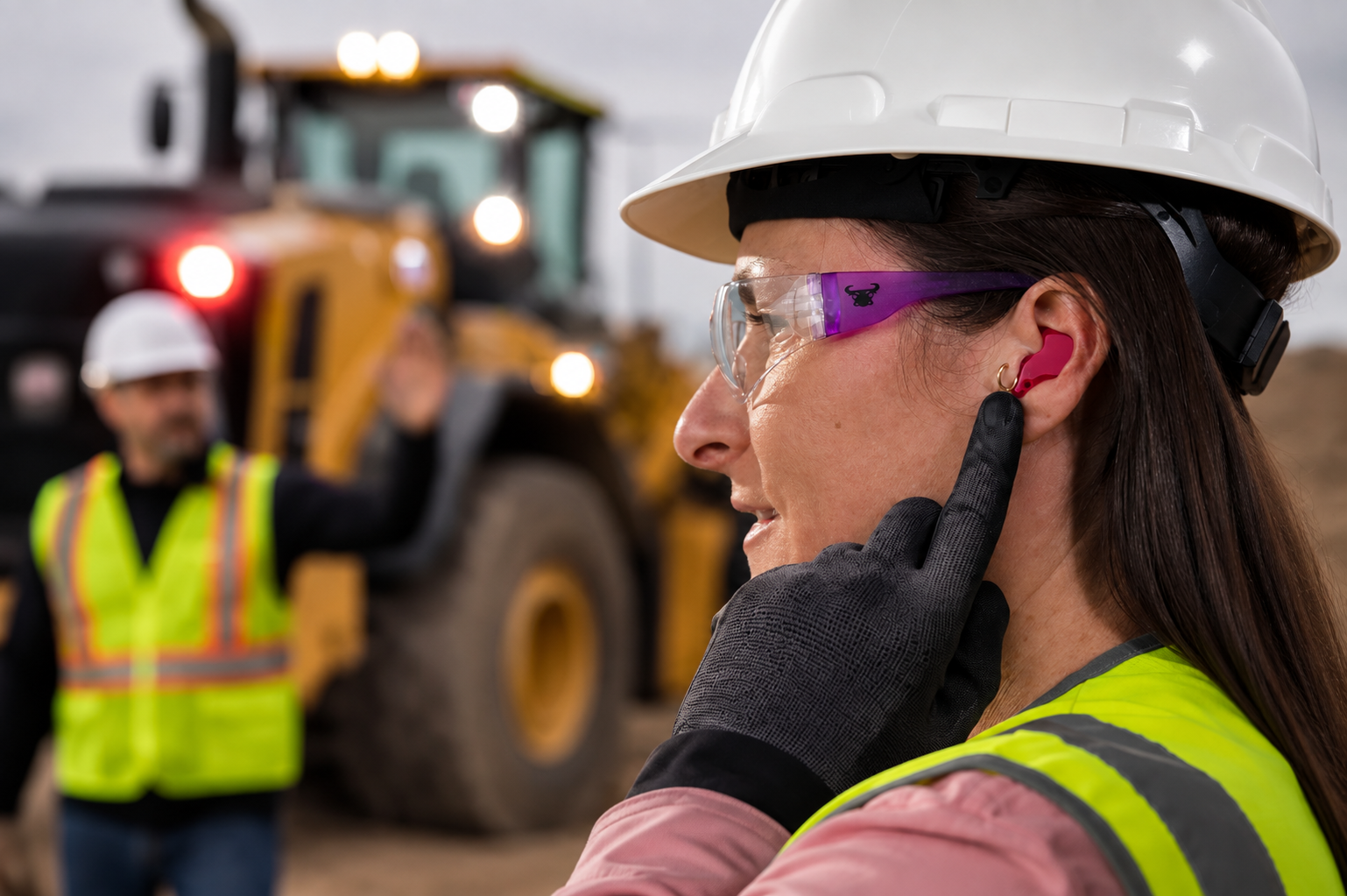
This runs counter to the common assumption. Effective hearing protection does not seal a worker off from their surroundings. It lowers the entire sound field to a safe yet audible range, so a forklift horn or a shouted warning continues to register.
Get the selection right and you protect hearing without sacrificing awareness. Get it wrong and the two goals work against each other for the whole shift.
The fix is well understood. Purpose-built filtered, electronic, and radio-ready protectors are designed for exactly this problem. The sections below cover what each one does and where it fits.
Can Workers Hear Alarms and Warning Signals While Wearing Hearing Protection?
Generally, yes, as long as the device is matched to the environment. Effective hearing protection lowers background noise without silencing it, so an alarm still stands out. The mechanism is straightforward: both the alarm and the surrounding noise drop by a similar amount, which keeps the warning as noticeable as before, at a safer overall volume.
An alarm designed to cut through a loud plant will generally keep cutting through after the alarm and the background have dropped by the same amount.
Problems appear only at the extremes. Very heavy protection in a space that is only moderately loud can pull the alarm below the level where a worker would notice it. An alarm that was poorly designed, or pitched too close to the frequency of the machinery, can also get lost once protection is added. Neither case means earplugs and alarms are incompatible. Both point to the same solution: match the amount and type of protection to what the space requires, rather than defaulting to the maximum rating.
Why Blocking Too Much Noise Is Its Own Hazard
Overprotection is a recognized safety failure, not a footnote. It occurs when a protector removes so much sound that the wearer cannot track a conversation, catch a warning, or judge from the noise whether their own machine is running correctly. NIOSH defines it as the point where a worker's exposure is pushed below roughly 70 dBA, and it lists the consequences directly: weaker communication, missed warnings, and the loss of the audible cues workers rely on to monitor their equipment.
The second-order effect is the real risk. A worker who feels cut off will loosen a plug or remove it entirely to hear a colleague or the radio, and at that moment they are standing in full noise with no protection at all.
The pattern repeats: protection smothers communication, the worker removes it, exposure rises. Guidance from bodies such as CCOHS, and from manufacturers, now builds "can they still hear and talk" into the selection decision rather than treating it as an afterthought.
How Much Protection Do Workers Actually Need?
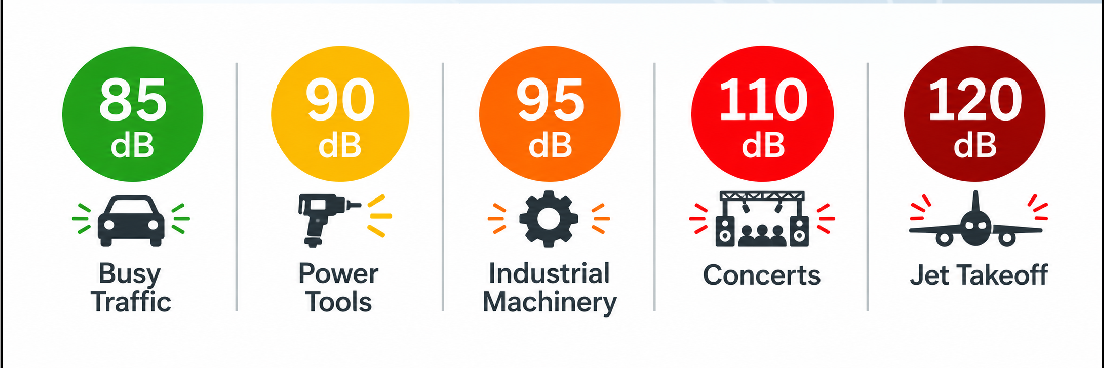
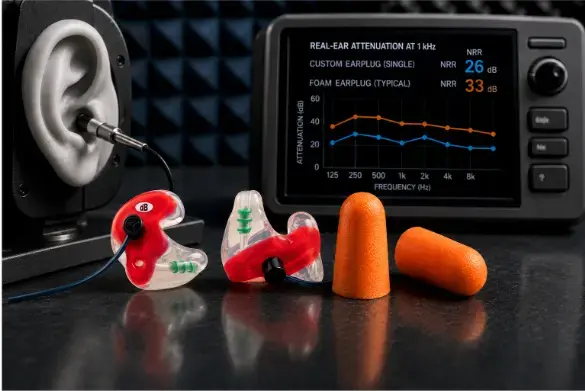
Usually far less than a site assumes. Figures from OSHA, cited widely across hearing conservation work, put 80 to 90 percent of general-industry noise exposures below 95 dBA measured as an 8-hour average. Within that moderate band, roughly 10 to 15 dB of genuine at-the-ear reduction is enough to bring exposure back into safe territory. Put a 33-rated earplug into a 90 dBA room and the effective level can fall toward 57 dB, which is squarely into overprotection.
The target is a window that is both safe and still audible, and most guidance places it around 70 to 85 dB at the eardrum. Land there and the worker stays protected while retaining enough of the environment to hold a conversation, register a reversing beeper, and notice when their machine changes pitch.
Selecting a protector rated near what the space requires, rather than the highest number the supplier stocks, is one of the most valuable habits a program can build.
Types of Hearing Protection That Let Workers Hear Alarms and Radios
Several categories of hearing protection reduce exposure while keeping the worker connected to their environment, and they achieve it in different ways. Which one fits depends on the noise level of the space, the amount of communication the job requires, and the nature of the work itself.
Filtered Hearing Protection
A filtered device passes incoming sound through an acoustic filter that trims noise fairly evenly across frequencies, instead of attenuating hardest at the top end the way plain foam does. Because much of what makes speech intelligible sits in those higher frequencies, foam leaves voices and alarms sounding muddy and hollow. A properly tuned filter brings the whole range down together, so the contour of speech and the shape of a warning tone survive at a lower volume.
For steady, moderate noise where people still need to talk and listen for signals, filtered protection is often the most practical answer, with no batteries or electronics to manage. The specification that matters most is a flat, or uniform, attenuation filter, ideally one that can be tuned to your site's noise level rather than fixed at a single value, so you protect without tipping into overprotection.
Level-dependent and Electronic Protection
Electronic protection, also called level-dependent, takes a more active approach. External microphones pass quiet and moderate sound through at close to its natural volume, then the device applies attenuation the instant noise turns hazardous. For the worker, that means normal awareness most of the time. They hear speech and the ordinary cues of their surroundings during the quiet stretches, and the protection only clamps down when a loud burst actually arrives.
This fits environments where the noise comes and goes, where people move in and out of loud zones, or where situational awareness simply isn't optional: security, public safety, running heavy equipment. Two specifications separate the good models from the rest. First, how fast the device reacts to a sudden burst. Second, how much amplification range it offers, because that is what decides whether quiet speech still comes through naturally or gets lost.
Hearing Protection with Radio Communication
For crews working in close proximity under sustained high noise, hearing protection with radio communication integrates two-way radio or intercom directly into the protector. Instead of removing an earplug for every incoming call, the worker receives radio audio inside the already-protected ear at a managed volume.
Where Custom Hearing Protection Fits
Comfort ultimately determines whether any of this holds up, because a protector nobody keeps in provides no protection. That is the case for custom hearing protection. Molded to the individual ear, it seals the same way every time and stays wearable across a full shift, which removes the main reason workers pull protection out. Custom devices are also available in filtered and communication-ready builds, so the same fit that keeps a worker comfortable can also preserve speech or carry radio traffic.
Custom Protect Ear combines both in a single plug. Its dB Blockers line uses acoustic filters tuned to your workplace noise, so protection sits where the environment requires it rather than blocking everything, and its dB Com options build two-way radio and comms into that same molded fit. One plug covers both noise and communication.
The point is not any single product. It is the approach behind it: protection sized to the environment the worker actually occupies, comfortable enough that they keep it in, and built so alarms and voices still get through.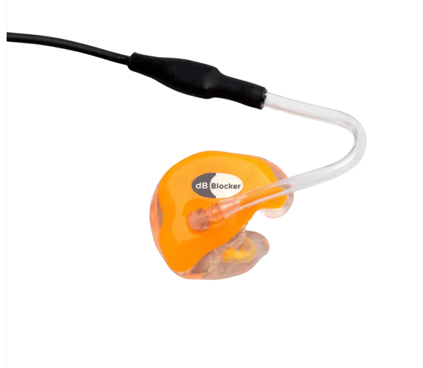 dB Com® Ultralite (3.5mm R/A jack connector)
The Bottom Line
Protecting hearing and hearing your surroundings were never opposing goals. On site, the usual failure is overprotection: enough attenuation to smother alarms and speech, which drives workers to remove their gear. The fix is to size protection to the noise you have actually measured, and to use filtered, electronic, or communication-integrated devices wherever people need to stay in contact. Do that and hearing stays protected while alarms and radios stay within earshot.
For a site weighing these choices, a custom specialist such as Custom Protect Ear can align protection with both the measured noise level and the communication demands each role carries.
The information contained in this article should not be used as medical or safety compliance information. If there is any special requirement of your workplace, seek advice from a competent audiologist, industrial hygienist or other competent authority under your governing occupational health and safety legislation.